Autumn 2026
“You just got to stop pitching plot. Plot is bullish**. Plot is what happens when you get behaviour right. Pitch me a line of dialogue, pitch me atmosphere, pitch me something visual. Stop pitching stuff that happens.” This surprising statement is from Tony Gilroy, aclaimed screenwriter with a long list of credits including the film Michael Clayton, the first three films in the Bourne franchise and the multi-award-winning TV series Andor. Gilroy was speaking about film scripts, but his words made me think not just about films but also novels, especially as his opinion flies in the face of the usual advice on novel writing - that plot is king. On reflection, I agree with him.
When I think of the most successful and enduring films and novels - from The Godfather, Some Like It Hot, Breakfast at Tiffanys, Withnail and I, to Great Expectations, Wuthering Heights, The Great Gatsby, Nineteen Eighty Four - what I remember most are not the plots but the characters and their behaviour, the atmospheres created, the visual scenes and lines of dialogue. Yes, the plots hold everything together but it is the characters’ behaviour that drives the plots.
Naturally, this made me think about my own two novels: Pains Hill and soon to be published Venetian Friends and Lovers. The two books appear initially to be vastly different - one is a dual-time frame, psychological thriller, spanning the eighteenth century and the 1990s, set in a real landscape garden, the other is a contemporary mid-life novel set in Venice, which explores female friendship and the dangerous power of beauty. What could they ever have in common? (This is another departure from publishing dogma: if authors want to be successful they should stick to one genre). Yet both books have much in common - both have visually-stunning settings which create distinct atmospheres and provide a profusion of “visual” scenes. Both books are driven by the characters’ behaviour - in Pains Hill, the frustrated artist, Hamilton, is obsessed with creating a revolutionary garden and his researcher, Jane, becomes obsessed with the death of Hamilton’s first wife; in Venetian Friends and Lovers, Lily always opts for fun and adventure, Patsy lets men control her and Sarah decides to lie in order to survive a tragedy.
As for “lines of dialogue,” it is easy to find memorable lines in great films:
I’m going to make him an offer he can’t refuse.
Nobody is perfect.
She’s a phony. But she’s a real phony.
We’ve gone on holiday by mistake.
Surprisingly, it’s more difficult to find instantly memorable dialogue from novels but it’s worth noting that two of the above film quotes started life in novels. Perhaps quotes are more memorable in films not only because they are spoken by charismatic actors but because an author can wield words outside of dialogue to create character, humour and commentary? The most memorable lines from novels are found not in dialogue but in the opening lines - Pride and Prejudice, Rebecca, A Tale of Two Cities, Nineteen Eighty-Four - or in last lines - Jane Eyre, Gone with the Wind, A Tale of Two Cities, Animal Farm - many of which have made their way into film adaptations
Lesson to this author: concentrate on behaviour, atmosphere and visuals, while creating memorable dialogue.
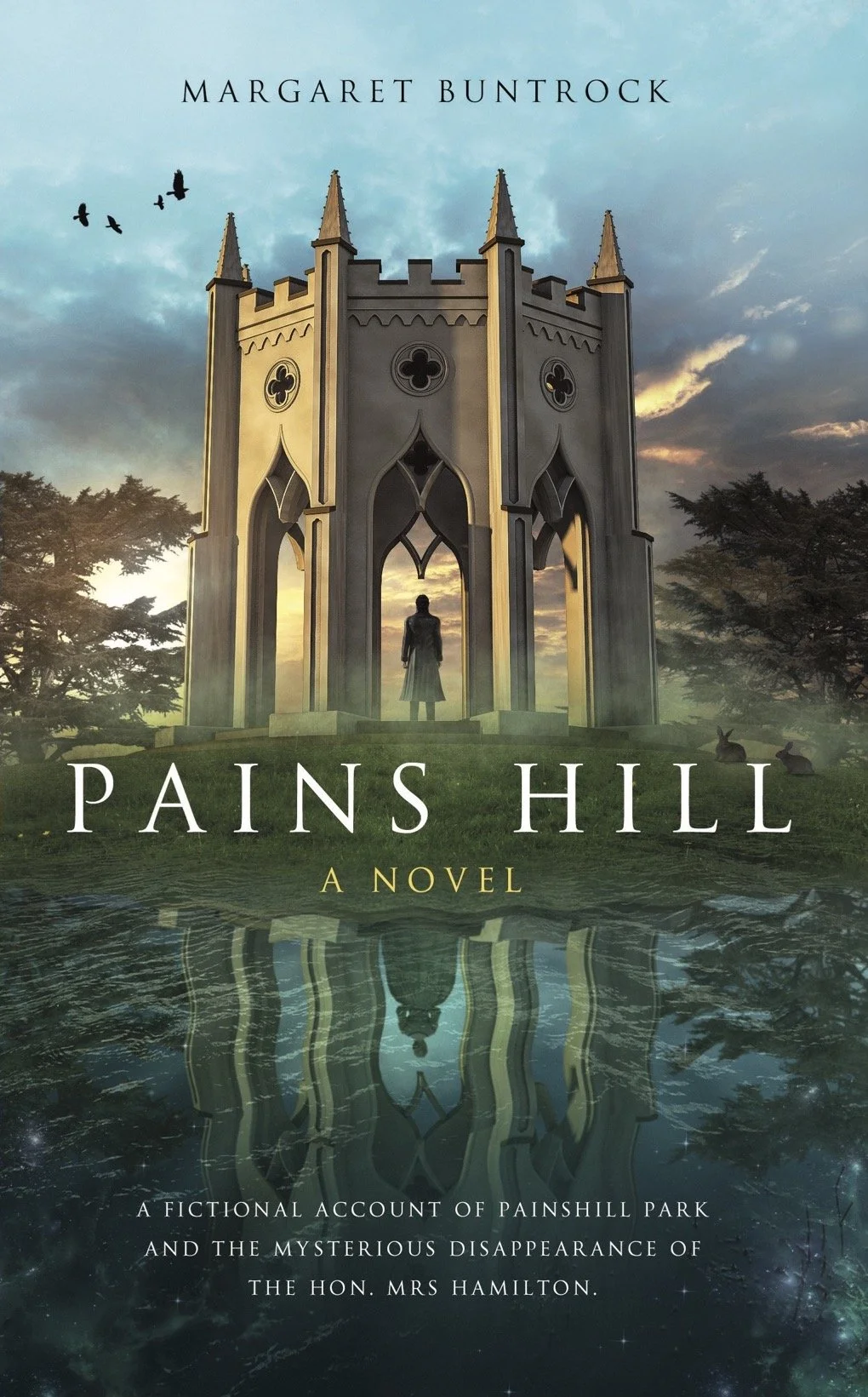
Pains Hill is available as a paperback from all good bookshops and online from Amazon and Waterstones. It is also available on Kindle. Signed and personally dedicated copies of the paperback can be purchased for £11.99 including postage (UK only) from margaretbuntrock@gmail.com
To read sample excerpts from Pains Hill, please see below.
For news of my new novel, Venetian Friends and Lovers, please click on next.
Excerpts from Pains Hill

“Is there a straight path back to your house, Mr. Hamilton?” asked Sir William. “We have wandered about your park in an exceedingly wavering manner.”
“Yes, there is a fairly straight, linear path we can take back to the house. But the garden is designed to be enjoyed through a series of convolutions, so that you will be suddenly surprised by the unexpected.”
“I prefer straight lines, simple and direct, non of these crooked zigzags which are most disagreeable. I have a singular aversion to zigzags.”
“It is a new fashion, uncle,” interrupted Henry.
Sir William snorted, then said, “Let’s get back to the house.”
— Pains Hill (Chapter 10)
“Suddenly, Charles felt something on his knee, his left knee. At first he hoped he had imagined it, but then he felt it again, only more strongly, a pressure on his silk breeches that could only be a hand, beneath the table, pressing down on his upper leg. He wished it could be his right leg and hoped for a moment that perhaps the comely Constance, sitting on his right, could be able to reach over far enough to place her hand on his left leg, but no, it was impossible, and the only person whose hand it could be was the older sister, Verity. He decided to ignore it, did not even look at her, and stared fixedly ahead.
As Sir William broke off from his paean to Marlborough and raised his wine glass, Henry Fox again attempted to advance his friend’s standing.
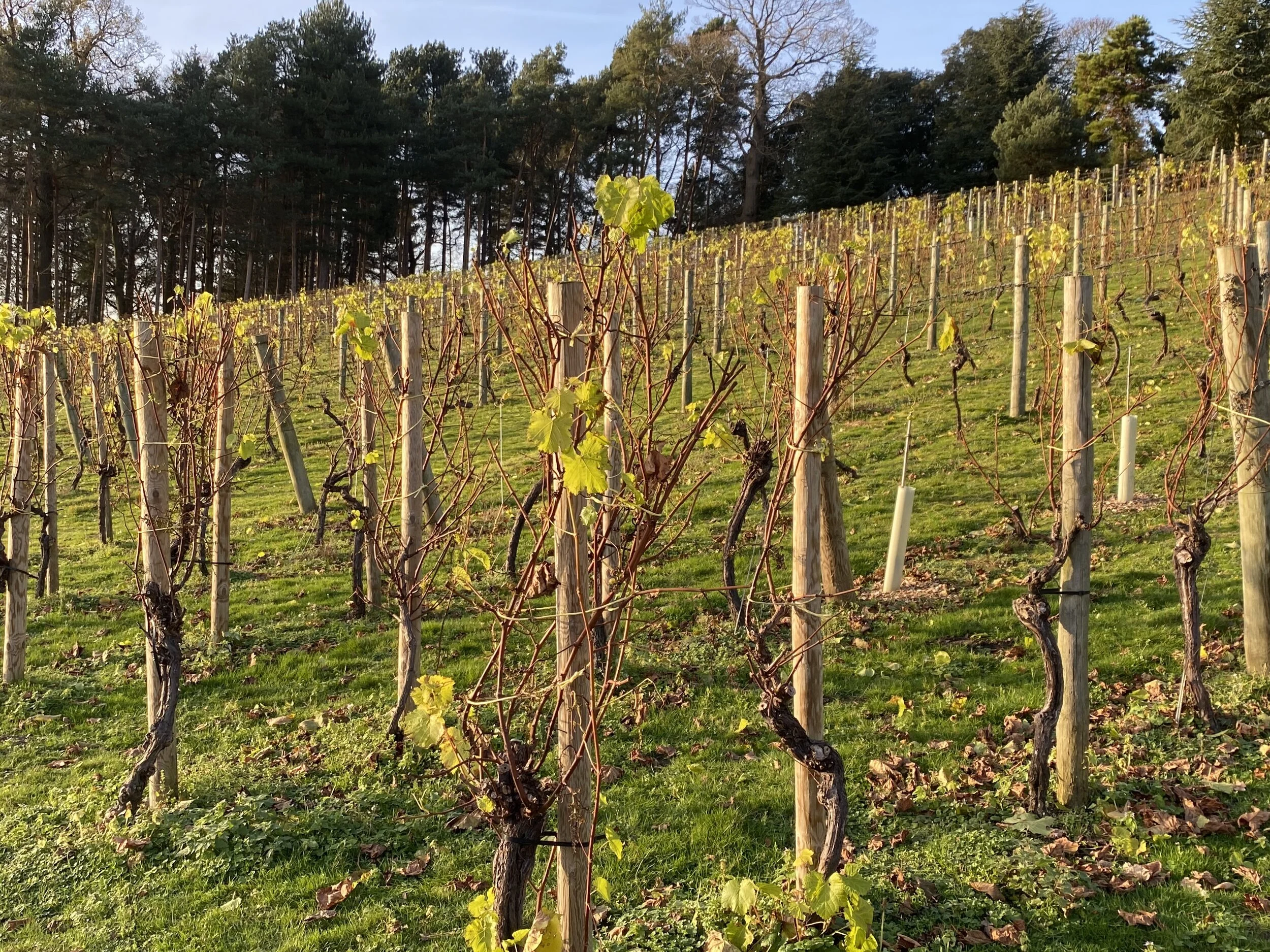
“Charles has planted a vineyard at his Pains Hill estate.”
“A vineyard, good gracious?” spluttered Sir William. “That sounds very foolhardy.”
Several of the other guests around the table tittered with laughter.
“The Romans had vineyards in England. I do not see why I should not be able to make a passable wine,” stated Charles refusing to feel chastened.
“I think you would be better to turn your land to husbandry.”
“I have a farm at Pains Hill, naturally, with cattle and sheep, cornfields and orchards.”
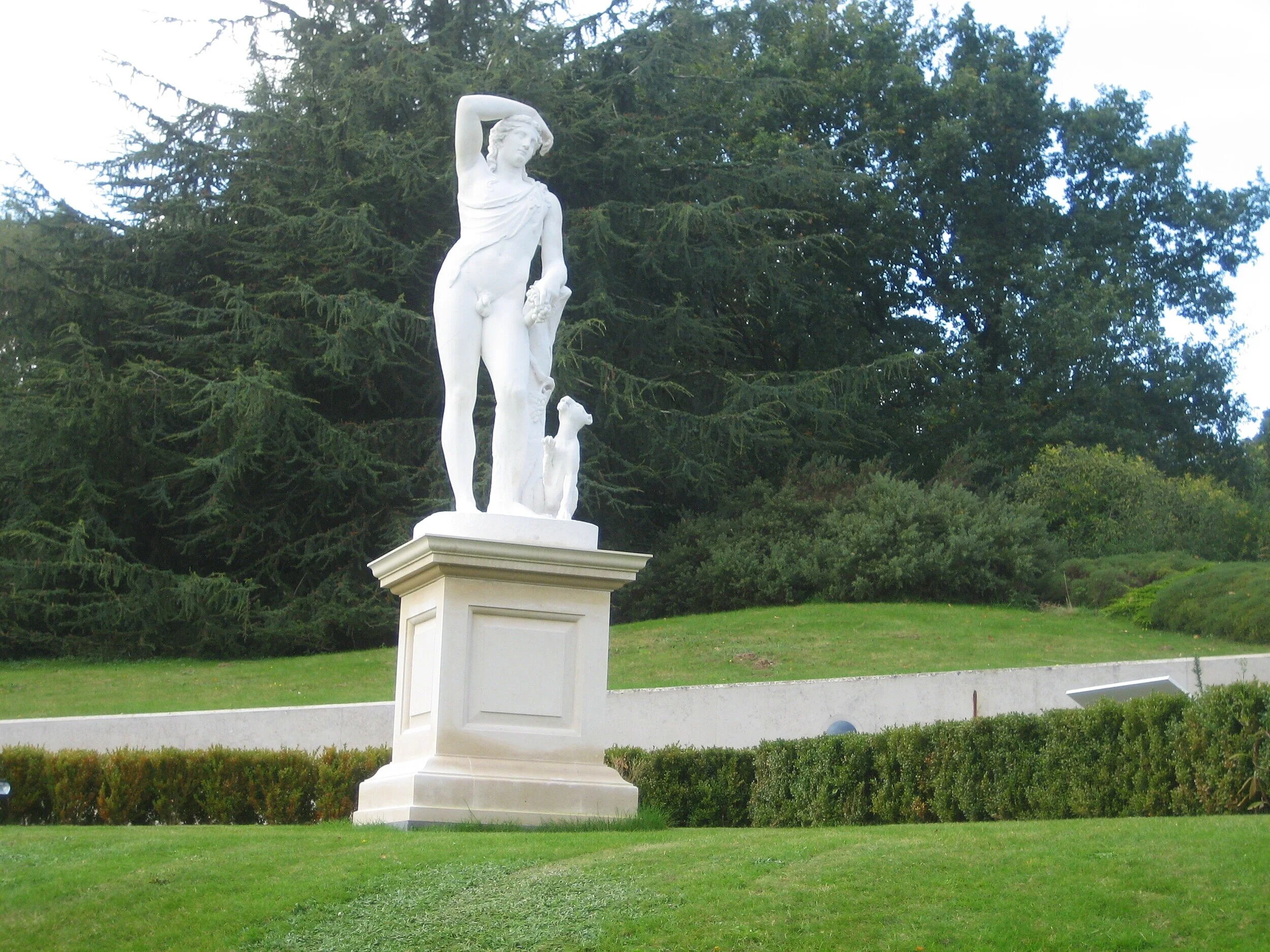
“And he is making a magnificent garden,” interjected Henry. ”He has flooded fields to create a lake and islands. And he has acquired statues in Italy. Including one of Bacchus. It is the tallest Greek statue in England.”
Charles felt the pressure on his left leg tighten, as fingers gripped his flesh beneath his breaches.
— Pains Hill (Chapter 8)

Jane, being a good historian, knew the power she wielded, the potential for manipulation, the creative process that takes place behind the most seemingly objective interpretation of facts and events, the selection and arrangement of evidence in the weaving of a narrative fit for an audience. For the duration of her Painshill contract, Charles Hamilton was hers, she possessed him and she liked the feelings of omnipotence her work gave her. And while she worked alone, she was not alone, others, though long dead, inhabited her realm and were her companions on her research journey, and she was the ring-master.
— Pains Hill (Chapter 5)
Slowly and silently he emerged from the trees, creeping towards the seated figure, approaching from behind, unseen, the hefty wooden weapon in his hands. The hunched figure was intent on watching the water, bowed over and beginning to feel stiff from sitting still for so long.
The man swung the wooden weapon high in the air and brought it down hard on the head of the seated figure with a crushing force. The seated figure toppled to the ground. The swans continued to glide across the water.
— Pains Hill (Chapter 27)
